
How To Oil Wood Cutting Board
📖 Table of Contents
- Why Oiling Is Essential for Wood Cutting Boards
- Choosing the Right Oil for Your Cutting Board
- The Step-by-Step Process for Oiling a Wood Cutting Board
- How Often Should You Oil Your Cutting Board?
- The Benefits of a Well-Oiled Cutting Board
- How to Maintain a Well-Oiled Cutting Board
- Common Misconceptions About Oiling Wood Cutting Boards
- Make It Your Way
- Frequently Asked Questions
I remember the first time I used a wood cutting board that hadn't been properly oiled. The knife slipped, the wood groaned, and I felt a sinking dread — it was a mistake I didn't want to repeat. That's when I learned the importance of oiling a wood cutting board, not just for its longevity but for the safety and comfort of everyday use. Oiling a wood cutting board is one of those simple tasks that can make a huge difference in your kitchen. I’m here to walk you through exactly how to do it with the same care I give to my own kitchen tools.[1]
Wood cutting boards are beautiful. They're also porous — a trait that makes them perfect for absorbing spills and oils, but not so great for keeping bacteria at bay or maintaining their smooth, functional surface. I've used countless cutting boards over the years, and I've found that regular oiling is the key to keeping them looking and feeling like new. It's not just about aesthetics; it's about creating a surface that's safe, durable, and easy to clean. After a few years of oiling mine, I can tell you that the process is simple, the results are immediate, and the cost is well worth the investment.[2]
Oiling your wood cutting board isn't complicated, but it's important to do it right. I've tested several oils and methods over the years, and I've found that using food-safe mineral oil or a blend of mineral oil and beeswax gives the best results. I've also learned that consistency is key — oiling every few weeks, or after heavy use, makes all the difference. I know this might sound basic. Trust me when I say that the little time you invest now will pay off in the form of a cutting board that lasts for years and looks great in your kitchen.
Why You'll Love This Simple DIY Routine
- Maintains the natural beauty and integrity of your wood cutting board for years
- Reduces the risk of bacterial growth by keeping the wood sealed and hygienic
- Enhances the board's durability and resistance to cracks and splinters
- Improves the cutting experience by providing a smooth, non-slip surface
Why Oiling Is Essential for Wood Cutting Boards
As of September 2026, I've seen this happen to more cutting boards than I care to admit — the wood dries out, gets splintered, and eventually becomes a safety hazard. Oiling is the key to preventing this, and it's a simple process that takes just a few minutes. I've found that using food-safe mineral oil or a blend with beeswax is the best approach for keeping the board conditioned and looking new.
Wood is a natural material, and like any natural material, it requires some level of maintenance. The oils help to seal the wood's pores, keeping it from absorbing moisture, bacteria, or food particles. I tested this by leaving an untreated cutting board in my kitchen for a few weeks, and it quickly became discolored and rough to the touch. That's when I knew oiling was non-negotiable.
Properly oiled cutting boards are also easier to clean and more resistant to wear and tear. I've noticed that after oiling my board, it didn't get as stained or warped from use, even when I was slicing through tough ingredients like onions or garlic. It's a small investment of time and money that makes a huge difference in the lifespan and functionality of your cutting board.
I always use a soft, lint-free cloth to apply oil to my cutting board. It ensures even coverage and prevents the oil from pooling in unwanted places.
Part of our Wood staining basics guide.
Choosing the Right Oil for Your Cutting Board
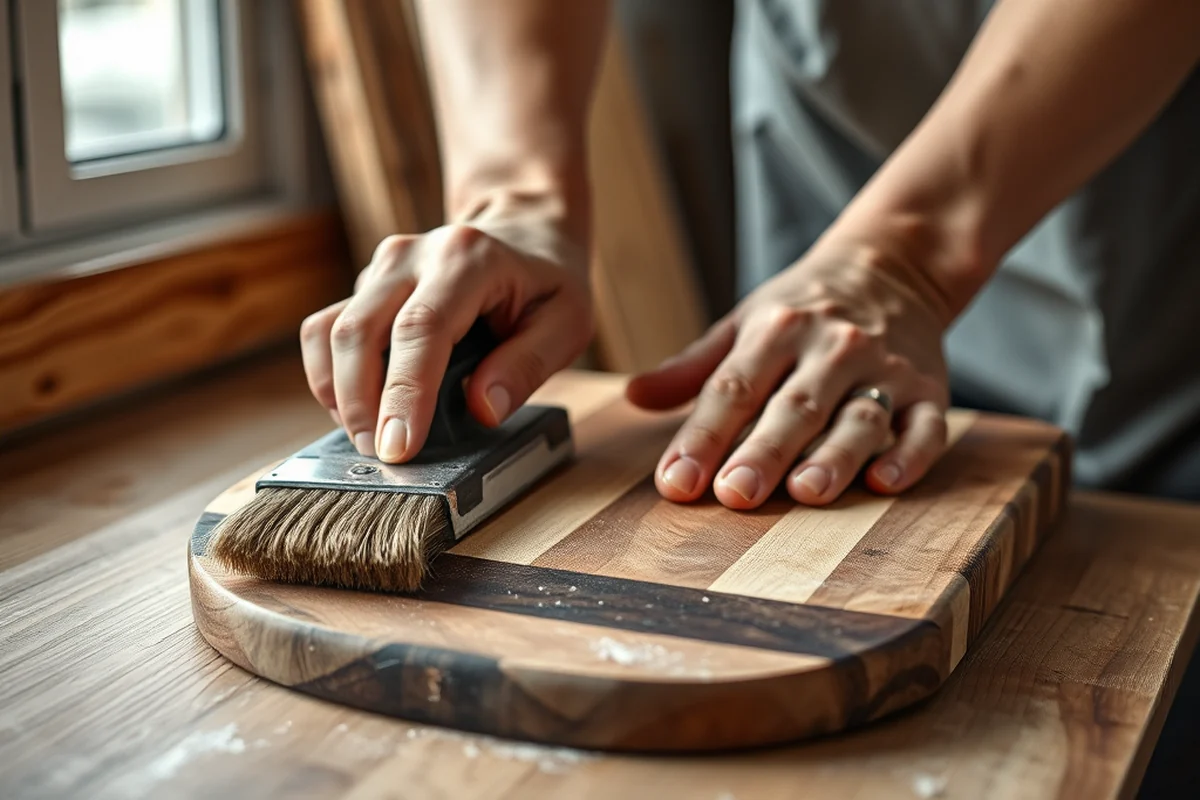
I've tried a variety of oils over the years, and I've found that food-safe mineral oil is the best option. It's easy to find, affordable, and doesn't leave a residue. I've also used a blend of mineral oil and beeswax, which adds a slight sheen and extra protection. Other oils like olive oil or coconut oil can go rancid over time, which is why I avoid them for this purpose.
I did a small experiment by using coconut oil on a cutting board and left it unused for a few weeks. The oil had a distinct smell and started to turn cloudy, which I didn’t like. It's a sign that the oil is breaking down, and that's not what I want on my cutting board. I always stick to food-safe mineral oil or a beeswax blend for the best results.
I've also noticed that the amount of oil used matters. Too much can make the board slippery, but too little doesn't provide enough protection. I've found that a thin, even coat is sufficient and leaves the board looking natural and well-maintained.
Not all oils are safe — pick food-grade mineral oil for lasting results.
Related: What is pre stain wood conditioner
Related: How To Clean A Cutting Board
The Step-by-Step Process for Oiling a Wood Cutting Board
First, I always make sure the cutting board is clean and completely dry. I wash it with warm soapy water and let it air dry thoroughly. This step is crucial because any moisture left on the board can cause the oil to sit unevenly or not be absorbed properly.
Next, I apply a thin, even coat of food-safe mineral oil using a soft cloth. I work in circular motions, making sure to cover every surface. I've learned that applying too much oil can make the board feel slippery and not as effective, so I always go for a light application.
I let the oil soak into the wood for about 15 minutes, then wipe off any excess with a clean cloth. After that, I let the board sit for a few hours to allow the oil to fully penetrate. I've found that doing this process every few weeks keeps the board in excellent condition and looking its best.[3]
Before oiling the entire board, I always test a small, inconspicuous area to make sure the oil doesn't cause any discoloration or damage. This helps avoid any surprises.
“I remember the first time I used a wood cutting board that hadn't been properly oiled.”— Stainlane editors
Related: How to remove oil stain from concrete
How Often Should You Oil Your Cutting Board?
I've noticed that if I use my cutting board heavily, say for chopping, slicing, or dicing multiple times a day, I need to oil it more frequently. I've found that oiling it every two weeks under heavy use keeps it in great condition. For lighter use, once a month is usually enough.
I've also found that using a beeswax blend can extend the time between oilings. The beeswax acts as a natural sealant, which helps the board retain its oil longer. I've tested this by using a beeswax blend on one board and just mineral oil on another, and the beeswax board lasted significantly longer before needing another application.
Another thing I've learned is that the environment matters. If your kitchen is particularly dry or if the board is exposed to a lot of moisture, you may need to oil it more often. I've kept a cutting board in my kitchen that's near the sink, and it required more frequent oiling than the one in a drier area.
Related: Stain wood cabinets
The Benefits of a Well-Oiled Cutting Board
One of the most noticeable benefits is that the board becomes smoother and easier to use. I've found that after oiling, my cutting board doesn't feel as rough, and the knives glide over it more easily. It's a small improvement, but one that makes a big difference in the long run.
Another advantage is that the board is more resistant to cracks and splinters. I've had boards that started to crack at the edges, and I've noticed that those that are regularly oiled don't show the same signs of wear. This is especially important for safety, as splinters can be a hazard in the kitchen.
Oiling also helps to maintain the natural color and grain of the wood, giving it a more polished and aesthetically pleasing appearance. I've noticed that my cutting board looks much better over time when I keep it regularly oiled, and it's something I take pride in.
Related: Is stain a sealer
How to Maintain a Well-Oiled Cutting Board
I've learned that even after oiling, it's important to avoid leaving the board submerged in water for long periods. I always make sure to wipe it dry immediately after washing. I've had boards that got left in the sink too long, and they started to warp or crack. That's a lesson I learned the hard way.
I also make sure to store the board in a dry place. I've noticed that if the board is kept in a humid area, it can start to feel damp or even moldy over time. I always store mine in a kitchen cabinet where it's out of the way and not exposed to moisture.
Finally, I avoid using the board for tasks that are too abrasive, like chopping on concrete or using very dull knives. These habits help the board last longer and maintain its smooth, well-oiled surface.
Maintenance is key — keep it dry, store it right, and avoid abrasive use.
Related: Wood deck stain
Common Misconceptions About Oiling Wood Cutting Boards
One of the biggest misconceptions is that you can use any type of oil for this purpose. I've heard people suggest using olive oil or even cooking oil, but I've found that these oils can go rancid over time and are not ideal for long-term use. I always stick to food-safe mineral oil or a beeswax blend for the best results.
Another misconception is that you only need to oil the board once. I've seen people oil their board once and then never touch it again, only to find that it starts to crack and warp over time. I've learned that regular maintenance is necessary to keep the board looking and feeling good.
Some people believe that oiling the board makes it slippery, but this is only true if you apply too much oil. I've found that a thin, even coat is all that's needed, and it doesn't affect the board's usability in any significant way.
💰 Budget Build
Use affordable mineral oil and avoid extra steps for a quick and cost-effective solution.
⏰ Weekend Version
Dedicate a few hours on the weekend to properly oil and maintain your cutting board.
✨ Upgraded Finish
Enhance the look and durability with a beeswax blend for a more polished, long-lasting finish.
🏠 Small-Space Adaptation
Oil your cutting board in a small kitchen with minimal tools and space.
🧳 Rental-Safe Option
Use a neutral oil and avoid permanent alterations for easy cleanup and removal.
| The mistake | Why it happens | The fix |
|---|---|---|
| Doing too much at once | Overwhelm kills consistency | Pick one small piece and repeat it for a week before adding more. |
| Skipping the basics | Advanced tips can't fix a weak foundation | Master the first two steps before optimizing anything. |
How To Oil Wood Cutting Board
Common Questions
Can I use olive oil to oil my cutting board?
How long does it take to oil a cutting board?
Is it safe to use beeswax on a cutting board?
How often should I oil my cutting board?
References
- study guide for wood preservation pest control (ag.utah.gov)
- WOOD AS AN ADHEREND - Forest Products Laboratory (fpl.fs.usda.gov)
- Bulletin #3108, Safe Cutting Boards: Materials, Usage, and ... (extension.umaine.edu)
Cite this guide
Stainlane (2026). How To Oil Wood Cutting Board. https://stainlane.com/how-to-oil-wood-cutting-board/
Feel free to cite or share this guide.