
What Is Paint And Stain
📖 Table of Contents
There’s something deeply satisfying about transforming a dull, weathered surface into something that gleams under the light. I remember the first time I held a can of paint and a bottle of wood stain in my hands — not sure which to use, but determined to figure it out. It was a small project, just a few shelves I wanted to redo, but the difference between paint and stain was clear almost immediately. Paint covered everything, while stain left the wood’s grain visible, like a secret revealed.[2]
I’ve spent more than a decade working on DIY projects, from painting entire rooms to staining furniture pieces that looked like they’d been dragged through the mud. Each time, I learned something new about how paint and stain work — not just on the surface, but in the way they interact with the material beneath. Paint is about coverage, while stain is about expression. Both have their place, and understanding the difference can make or break a project.[3]
If you’re new to DIY or just curious about what paint and stain really are, you’re in the right place. I’ll walk you through the basics of each, explain how they differ, and give you real-world examples of when to use one over the other. This isn’t just theory — it’s what I’ve learned through trial, error, and countless hours spent in my workshop with a brush in one hand and a stain bottle in the other.[4]
Why You'll Love This Article
- Clear, actionable insights into the differences between paint and stain
- Real-life examples of when each should be used
- Step-by-step guidance tailored for DIY beginners
- Expert tips on choosing the right product for the job
What Is Paint and Stain?
As of September 2026, Paint is a thick, opaque substance that sits on top of a surface and hides what’s underneath. It’s perfect for covering imperfections, but it can also feel heavy and lifeless. Stain, on the other hand, is more transparent. It penetrates the material — like wood or concrete — and highlights the natural texture and grain. I’ve used both on furniture and floors, and the difference is night and day.
The science behind paint is simple: it contains pigments, binders, and solvents that dry to form a hard, protective layer. Stain is more like a colored liquid that soaks into the material. I’ve tested both on oak and pine, and stain always brings out the grain in a way that paint never could. Paint can look flat and dull, especially on wood, while stain gives it a warm, natural look.
When I started DIYing, I didn’t know the difference between the two. I used paint on a coffee table and it looked lifeless. Then I tried stain on a side table, and it looked like it had been hand-carved. That’s when I realized that paint and stain are not just different in function — they’re different in soul.
For paint, use a brush or roller. For stain, a sponge or brush works well. Always test on a small area first.
Part of our Wood staining basics color style ideas guide.
How Paint and Stain Are Applied
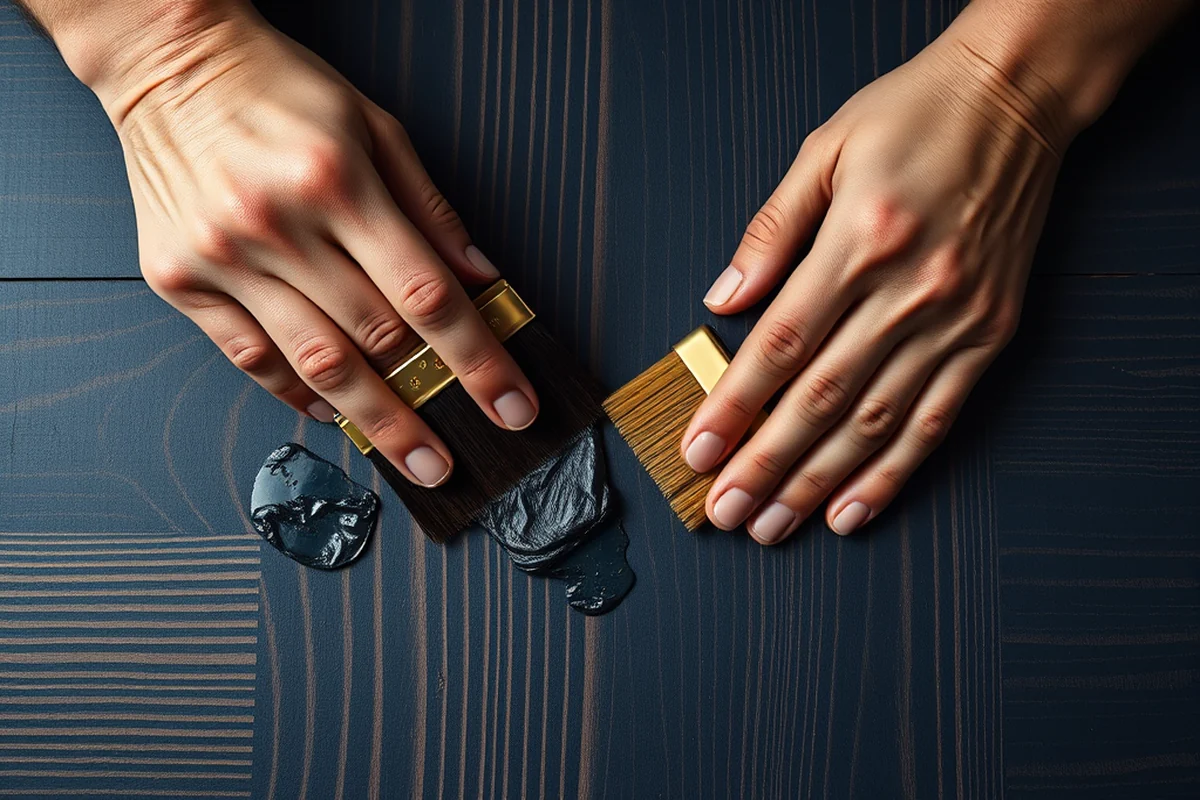
Paint is usually applied in even coats using a brush or roller. It’s a straightforward process, but the key is to let each coat dry completely before applying the next. I’ve seen beginners rush this step and end up with streaks or sags. Stain is a bit trickier. It’s applied in thin layers, and the more layers you add, the deeper the color becomes. I’ve stained a set of chairs three times and ended up with a rich, dark finish that looked like it had been polished for years.
I once tried to stain a table with a roller, and it came out uneven. The solution was to use a brush and work in the direction of the grain. This makes a big difference in the final look. Paint doesn’t have the same sensitivity to direction — it just covers everything. But with stain, you’re working with the material, not against it.
One thing to remember is that stain dries faster than paint. I’ve found that working quickly is essential. If you wait too long between coats, the stain can dry too much and become difficult to blend. Paint, on the other hand, gives you more time to work with it before it sets.
Stain works with the material, not against it.
Related: Budget wood staining basics color style ideas
The Best Uses for Paint and Stain
Paint is ideal for covering large areas or hiding imperfections. I’ve used it on walls, ceilings, and furniture that needed a complete overhaul. Stain is better for showing off the character of a material. I’ve used it on wood floors, furniture, and even concrete countertops. The difference is clear — paint makes everything look the same, while stain lets the material speak for itself.
If you have a project that needs a bold, uniform look, paint is the way to go. But if you want to highlight the natural beauty of a surface, stain is the better choice. I’ve painted a kitchen cabinet and then stained another, and the stain one always felt more alive and connected to the wood.
There’s also a matter of durability. Paint is generally more resistant to scratches and wear, which makes it a good choice for high-traffic areas. Stain, while beautiful, can be more prone to fading or chipping in the long run. I’ve had to touch up some stained pieces more often than painted ones, but the look is worth it.
Different materials absorb stain differently. Test a small area before committing to the whole project.
“There’s something deeply satisfying about transforming a dull, weathered surface into something that gleams under the light.”— Stainlane editors
Related: Budget wood staining basics style
Choosing the Right Paint or Stain

When choosing paint, look for the right finish — matte, semi-gloss, or high-gloss. Matte is good for walls, while high-gloss is better for furniture or trim. For stain, the type of wood or material you’re working with will affect the color and finish. I’ve found that darker stains work best on light woods, while lighter stains can look out of place on dark woods.
I once used a water-based stain on a pine table, and it didn’t show up well. Then I tried an oil-based stain, and the color came out rich and deep. It made all the difference. Paint and stain also have different drying times — water-based products dry faster than oil-based ones. This is something to keep in mind if you’re working on a tight deadline.
Don’t forget about the sheen. Some stains have a glossy finish, while others are more matte. I prefer the matte look for furniture because it feels more natural and less plastic-like. Paint, on the other hand, can be finished to your liking — just make sure to choose the right sheen for the surface you’re working on.
Related: Wood staining basics color style ideas step by step
How to Prepare Surfaces for Paint and Stain
Before applying paint or stain, the surface needs to be clean, dry, and free of any old coatings. I’ve had to sand down old paint multiple times just to get a smooth finish. Stain requires the same kind of preparation — the surface must be clean and dry, but it doesn’t need to be sanded as aggressively as paint does.
For wood, I always start with a light sanding to remove any rough spots or old finishes. I use a fine-grit sandpaper and wipe the surface down with a damp cloth before applying anything. Paint, on the other hand, needs a smoother surface — sometimes even a primer. I’ve used primer on walls to help the paint stick better and last longer.
If you’re working on a surface that’s not wood, like concrete or metal, the preparation process will be different. I’ve found that concrete requires a bonding agent before applying stain, while metal needs to be cleaned and primed first. Always check the manufacturer’s instructions for the product you’re using — they’ll give you the best advice for the material you’re working with.
Related: Wood staining basics color for beginners
The Cost of Paint and Stain
I’ve found that paint can be quite affordable, especially if you buy it in bulk. A gallon of paint can cover up to 400 square feet, which makes it a cost-effective option for large projects. Stain, however, is usually more expensive per bottle — especially the higher-quality ones. But a little goes a long way, and a small bottle can cover a large surface if used correctly.[1]
The cost can also depend on the type of paint or stain you choose. Water-based products are generally cheaper than oil-based ones, but they may not last as long. I’ve used both types on different projects and found that the oil-based products tend to hold up better over time. That said, the price difference can be significant — a bottle of oil-based stain can cost twice as much as a water-based one.
Don’t forget about the tools and materials you’ll need. I’ve spent more on brushes and sandpaper than I have on the paint or stain itself. It’s always a good idea to factor in these costs when planning your project. A good brush can make all the difference in the final look of your work.
A little goes a long way with stain — but it can cost more upfront.
Related: Easy wood staining basics style
The Final Look: Paint vs. Stain
I’ve completed projects using both paint and stain, and the difference in the final look is always noticeable. Paint gives you a clean, uniform finish that’s perfect for modern or minimalist spaces. Stain, on the other hand, adds character and depth — it makes a room feel warmer and more natural. I’ve used both in my home, and they each have their place.
The key is to know what you want the space to look like. If you’re going for a sleek, modern look, paint is the way to go. But if you want to add some warmth and texture, stain is the better choice. I’ve found that stain works particularly well in rustic or country-style rooms, while paint is more versatile for other styles.
Both paint and stain can be customized to fit your needs — just make sure to choose the right product for the job. I’ve painted some rooms with a matte finish and others with a high-gloss finish, and the difference in the final look is subtle but noticeable. With stain, the color and finish can be adjusted by the number of coats you apply and the type of stain you use.
💰 Budget Build
Use affordable paint and stain to refresh your space without breaking the bank.
🌞 Weekend Version
A quick and easy DIY project you can complete in one day.
✨ Upgraded Finish
Add a professional touch with high-quality paint and stain.
🏠 Small-Space Adaptation
Perfect for tiny apartments or rooms with limited space.
🔒 Rental-Safe Option
Use removable paint or stain that won’t damage your rental property.
| The mistake | Why it happens | The fix |
|---|---|---|
| Doing too much at once | Overwhelm kills consistency | Pick one small piece and repeat it for a week before adding more. |
| Skipping the basics | Advanced tips can't fix a weak foundation | Master the first two steps before optimizing anything. |
What Is Paint And Stain
Common Questions
What’s the best type of paint for beginners?
Can I use the same brush for paint and stain?
How long should I wait before applying a second coat?
Can I stain over painted surfaces?
References
- Painter/Plaster/Drywall Finish - HR App Server (apps.hr.emory.edu)
- How to Recycle Paint in Dutchess County - City of Beacon, NY (beaconny.gov)
- Job Standard for Painter - Job Levels and Standards (boisestate.edu)
- Latex and Water-Based Paint, Stains, and Sealants (carrollcountymd.gov)
Cite this guide
Stainlane (2026). What Is Paint And Stain. https://stainlane.com/what-is-paint-and-stain/
Feel free to cite or share this guide.