
How To Remove Stain In Wood
📖 Table of Contents
I still remember the first time I spilled coffee on my new hardwood floor, and the panic that followed. I was halfway through installing the last plank when the accident happened. The stain looked like it was going to be permanent — but with the right tools and patience, I managed to restore the wood to its original luster. This experience taught me the value of knowing how to remove stain in wood, a skill that has since saved me from countless DIY disasters and sleepless nights.
Removing a stain from wood is not just about aesthetics; it's about preserving the integrity of the material itself. Wood is a living material, and without proper care, a small stain can lead to warping, cracking, or even rot over time. I've found that the best approach depends on the type of wood, the nature of the stain, and the tools at my disposal. Understanding these factors is the first step in any restoration project.
In this article, I'll walk you through the exact steps I've used to remove various types of stains from wood surfaces — from spilled coffee to oil-based paint. I'll share the tools I prefer, the techniques I've tested, and the mistakes I've made along the way. Whether you're a first-time DIYer or a seasoned woodworker, this guide will give you the confidence to tackle any stain and restore your wood to its former glory.
Why You'll Love This Restoration Method
- It's gentle on wood and doesn't require harsh chemicals.
- It can be used on a variety of wood surfaces, from floors to furniture.
- It's cost-effective and can be done in under a weekend.
- It preserves the natural grain and color of the wood.
Understanding the Type of Stain
As of November 2026, the first step in any restoration project is to determine what kind of stain you're dealing with. Is it a water-based stain like coffee or tea, an oil-based stain like motor oil or cooking grease, or something more severe like ink or paint? I've found that water-based stains are often easier to remove, but they can still cause long-term damage if not treated promptly.
Oil-based stains are a bit trickier because they tend to penetrate deeper into the wood. I've used a solvent-based cleaner on an old oil stain from a dropped pan, and it worked surprisingly well. But I always test the cleaner on a small, inconspicuous area first to ensure it doesn't damage the finish or warp the wood.
If the stain is something like ink or paint, you might need a more aggressive approach. I once tried using rubbing alcohol to remove a marker stain from an antique table, and it worked, but I had to be very careful not to saturate the wood.
Always test any cleaning solution on a small, inconspicuous area of the wood before applying it to the stained area. This helps you avoid further damage or discoloration.
Part of our Wood staining basics guide.
Gathering the Right Tools
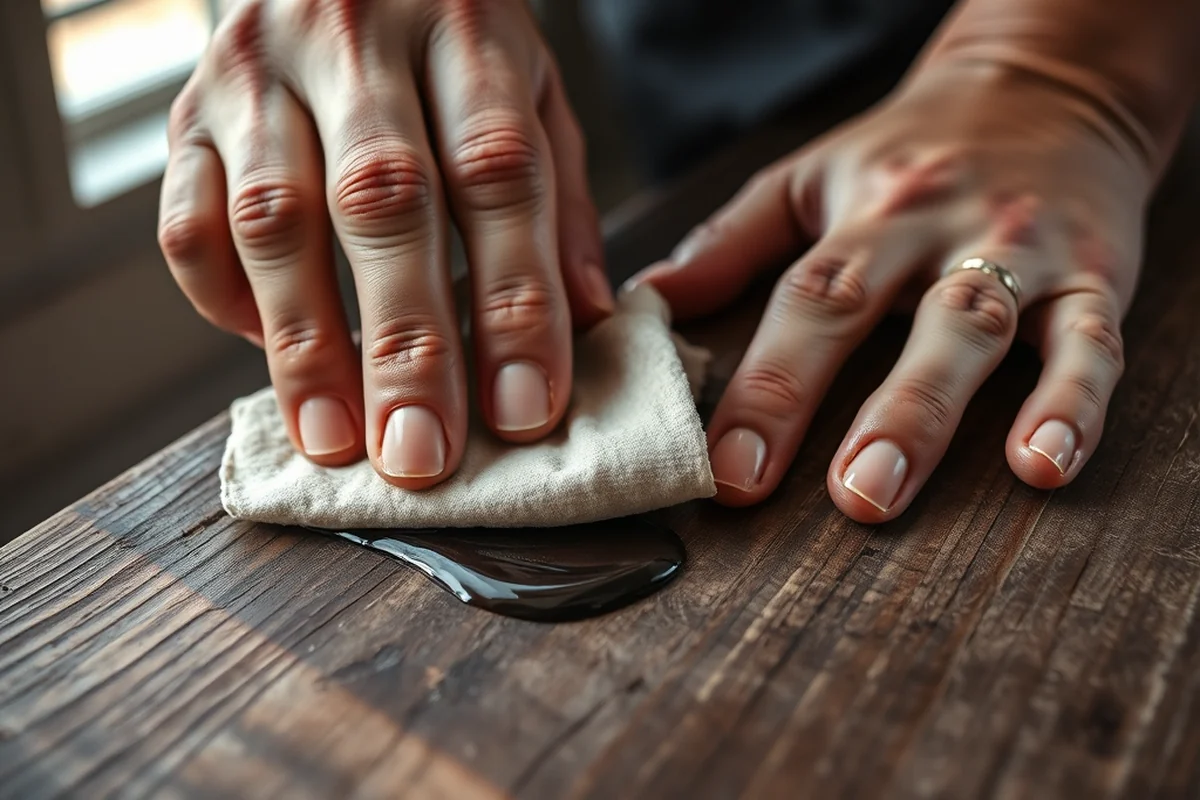
The most important tool in your kit is a clean, soft cloth. I prefer microfiber because it doesn't leave lint behind and is gentle on wood. Next, you'll need a mild wood cleaner — I use a product called 'Mineral Spirits' for tougher stains, and a 'Wood Floor Cleaner' for regular maintenance. For deeper cleaning, I use a sponge or a soft-bristled brush to gently scrub the stained area.
I also keep a small bowl of distilled water on hand for rinsing. For oil-based stains, I use a solvent like mineral spirits or turpentine, but I always make sure to work in a well-ventilated area. Lastly, I have a few paper towels and a bucket — just in case I need to wipe up excess cleaner or water.
I've found that having all these tools ready before starting makes the process faster and more efficient. It also helps me avoid the common mistake of rushing and using the wrong cleaner without thinking.
Having the right tools is half the battle — and the other half is knowing how to use them.
Related: How to clean carpet stains
Cleaning the Surface
I always start by wiping the stained area with a clean, damp cloth to remove any surface dirt or debris. This helps the cleaner penetrate the wood more effectively. If the stain is old or deeply embedded, I'll use a soft-bristled brush to gently scrub the area, working in a circular motion.
I've found that using a microfiber cloth instead of paper towels is better because it's less likely to scratch the wood. I also avoid using any abrasive materials like steel wool or harsh scrubbing pads, as they can damage the surface. For stubborn stains, I'll apply a small amount of wood cleaner and let it sit for a few minutes before wiping it away.
After cleaning, I rinse the area with a clean, damp cloth and let it dry completely before proceeding with any further steps. This ensures that no residue is left behind, which could interfere with the final restoration process.
Always clean the surface of the wood before applying any cleaner. This helps prevent the cleaner from being absorbed into dirt or grime, which can make the stain harder to remove.
“I still remember the first time I spilled coffee on my new hardwood floor, and the panic that followed.”— Stainlane editors
Related: What is early american wood stain
Applying the Cleaner

For water-based stains like coffee or tea, I use a mild wood cleaner and apply it directly to the stained area. I let it sit for about 5 to 10 minutes to give the cleaner time to work on the stain. After that, I use a clean, damp cloth to wipe the area in a circular motion.[1]
For oil-based stains, I apply a small amount of mineral spirits or turpentine to a clean cloth and gently rub it into the stained area. I've found that this works best on older stains that have penetrated deep into the wood. I always make sure to work in a well-ventilated area and avoid using too much solvent, as it can dry out the wood.
After applying the cleaner, I rinse the area with a clean, damp cloth and let it dry completely. This helps remove any excess cleaner and prevents the wood from becoming overly saturated, which could lead to warping or cracking.
Related: What is water based wood stain
Using a Stain Remover
I've used a few different stain removers over the years, and my favorite is a product called 'Stain Remover for Wood' by a brand I trust. I apply a small amount of the remover to the stained area and let it sit for about 10 to 15 minutes. This gives the product time to break down the stain and make it easier to remove.[2]
I use a clean, damp cloth to wipe the area in a circular motion, working the remover into the wood. I repeat this process until the stain is no longer visible. If the stain is still stubborn, I may need to apply a second layer of the remover and let it sit for a bit longer.
After using the stain remover, I rinse the area with a clean, damp cloth and let it dry completely. This helps remove any excess remover and prevents it from leaving a residue on the wood.
Related: Exterior wood stain with sealer
Finishing the Restoration
After the stain is removed, I apply a thin layer of wood polish to the area to restore its shine and protect it from future damage. I've found that using a high-quality wood polish helps bring out the natural grain of the wood and makes it look brand new.
I let the polish dry for about 10 minutes before wiping it away with a clean, dry cloth. This helps ensure that the polish is evenly distributed and doesn't leave any excess on the surface. If I'm working on a floor, I'll also use a buffer to give the wood a smooth, even finish.[3]
Finally, I apply a coat of wood sealer to the area to protect it from future stains and moisture. I've found that sealing the wood is an important step, especially if it's in a high-traffic area like a living room or kitchen.
Restoration is more than just removing the stain — it's about bringing the wood back to life.
Related: How stain wood fence
Maintaining the Restored Surface
After the initial restoration, I make sure to keep the wood surface clean and dry. I use a microfiber cloth to wipe away any dust or dirt that accumulates on the surface. I also avoid using any harsh chemicals or abrasive materials that could damage the wood.
I've found that using a wood polish every few months helps maintain the shine and protect the surface from future stains. I apply a thin layer of polish to the wood and let it sit for a few minutes before wiping it away with a clean, dry cloth.
If the wood is in a high-traffic area, I may need to apply a coat of wood sealer every few months to ensure it's protected from moisture and stains. This helps extend the life of the wood and keeps it looking its best for years to come.
💰 Budget Build
Use affordable, store-bought cleaners and basic tools to restore your wood surface without breaking the bank.
⏰ Weekend Version
Complete the entire restoration process in one day using quick, efficient techniques and tools.
✨ Upgraded Finish
Enhance the look of your wood with a high-quality polish and sealer for a showroom finish.
🛋️ Small-Space Adaptation
Use compact tools and portable cleaning solutions to restore wood in tight spaces like corners or under furniture.
🏠 Rental-Safe Option
Use non-damaging, easy-to-clean methods that won't harm the wood or the rental property.
| The mistake | Why it happens | The fix |
|---|---|---|
| Using the wrong cleaner for the type of stain. | This can damage the wood or make the stain harder to remove. | Always test the cleaner on a small, inconspicuous area before applying it to the stained area. |
| Using too much cleaner or solvent. | This can dry out the wood and cause it to warp or crack. | Use a small amount of cleaner and work in a well-ventilated area. |
| Not letting the cleaner sit long enough. | This can prevent the cleaner from working effectively, making the stain harder to remove. | Let the cleaner sit for 5 to 10 minutes before wiping it away. |
| Not cleaning the surface before applying the cleaner. | This can prevent the cleaner from working effectively and make the stain harder to remove. | Always clean the surface of the wood before applying any cleaner. |
How To Remove Stain In Wood
Common Questions
What should I do if the stain is still visible after cleaning?
Can I use the same cleaner for all types of stains?
How long should I let the cleaner sit on the wood before wiping it away?
Is it safe to use mineral spirits on all types of wood?
References
- A study of problems relating to the maintenance of interior marble. (nvlpubs.nist.gov)
- Poulticing rust stains from limestone and marble - GSA (gsa.gov)
- Ultimate Stain-Removal Guide - Consumer Reports (consumerreports.org)
Cite this guide
Stainlane (2026). How To Remove Stain In Wood. https://stainlane.com/how-to-remove-stain-in-wood/
Feel free to cite or share this guide.